
FIELD NOTES
On Translation
Years ago, during some post-graduate studies, I created a collage. That small collage became an enameled piece. The enameled piece then became a small weaving. What surprised me was that each translation was successful in its own way. The materials changed completely, yet something essential remained intact.
Since then I've translated textile pieces into digital drawings, drawings into prints, prints into paintings, and paintings into other forms. Looking back, I realize I was never really interested in preserving a medium. I was interested in seeing what happened when an idea crossed a boundary.
Artists are often encouraged to search for something new. But I'm beginning to wonder if novelty is sometimes overrated.
After nearly six decades of making things, I have accumulated a vast archive of shapes, structures, compositions, rhythms, and visual questions. Rather than searching endlessly for the next idea, I find myself returning to earlier work and asking what else it might become.
A textile piece becomes a digital drawing.
A collage becomes a painting.
A painting becomes an embossing.
The same visual thought continues its journey in a different language.
Perhaps the archive is not a record of where I've been. Perhaps it is a quarry—a place to excavate, revisit, and rediscover possibilities that were present all along.
There is something deeply satisfying about this approach. It feels less like reinvention and more like conversation. The work made decades ago speaks to the work being made now.
And occasionally it seems to whisper:
You weren't finished with this yet.
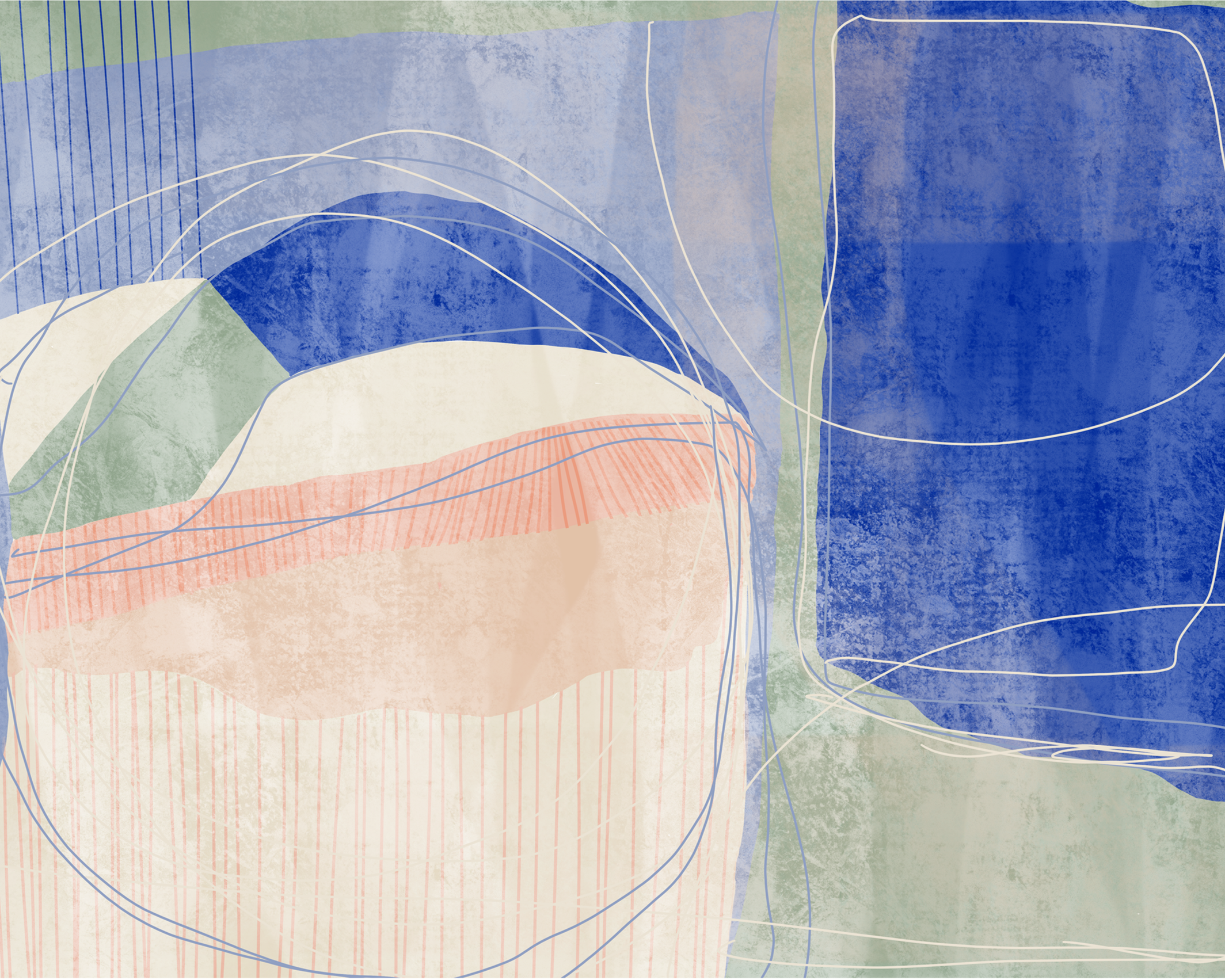
Lake Breeze (detail) - digital artwork inspired by a quilted drawing from 2012